


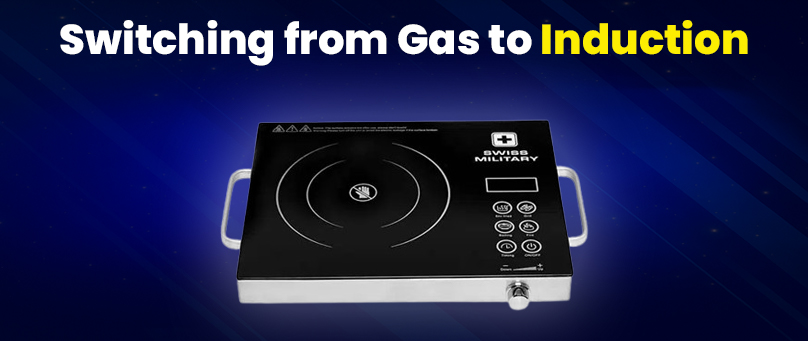
Making the switch from a traditional gas stove to an induction cooktop is becoming increasingly popular in Indian homes. With rising LPG prices, safety concerns, and the convenience of modern technology, induction cooking is a smart upgrade for many households. If you’re planning to make the transition, this detailed guide will walk you through everything you need to know. 👇
🌟 Why Switch to Induction Cooking?
Before diving into the steps, let’s understand why induction cooking is gaining popularity:
- ⚡ Energy Efficient – Direct heating reduces energy loss
- 🔒 Safer Cooking – No open flame, lower risk of accidents
- 🧼 Easy to Clean – Flat surface, no messy burners
- ⏱️ Faster Cooking – Heats up instantly
- 🌿 Eco-Friendly – Reduces dependence on fossil fuels
🪜 Step-by-Step Guide to Switching
🥘 Step 1: Understand How Induction Works
Induction cooktops use electromagnetic energy to directly heat cookware. Unlike gas stoves, the surface stays relatively cool while the vessel heats up.
👉 Important: Only compatible cookware will work.
🍲 Step 2: Check Your Cookware Compatibility
Not all utensils work on induction.
✔️ Works:
- Stainless steel (magnetic base)
- Cast iron
- Induction-compatible cookware
❌ Doesn’t work:
- Aluminum
- Glass
- Copper (unless induction base)
👉 Tip: Use a magnet – if it sticks, it works! 🧲
🛒 Step 3: Choose the Right Induction Cooktop
Look for features based on your needs:
- 🔢 Power levels (1200W–2000W ideal for Indian cooking)
- 🍛 Pre-set menus (roti, curry, rice)
- 🧯 Auto shut-off safety
- 🔘 Touch controls or knob controls
🔌 Step 4: Check Electrical Setup
Induction cooktops need a stable power supply.
- Ensure proper earthing ⚡
- Use a dedicated socket
- Avoid extension boards for safety
🍳 Step 5: Learn Basic Cooking Adjustments
Switching from gas to induction requires a slight change in cooking style:
- 🔥 Heat is instant – reduce power early
- 🫕 Use flat-bottom cookware
- ⏳ Cooking time is shorter
👉 Example: Tea boils faster, so keep an eye on it! ☕
🍛 Step 6: Practice Indian Cooking on Induction
Yes, you can cook everything! 🇮🇳
- 🫓 Roti/Chapati – Use flat tawa
- 🍛 Sabzi – Works perfectly
- 🍚 Rice – Faster and consistent
- 🥘 Dal – Efficient pressure cooking
👉 Some traditional cooking methods may need adjustment, but results are great!
🧽 Step 7: Maintenance & Cleaning
Keeping your induction cooktop clean is super easy:
- 🧼 Wipe with a soft cloth after use
- 🚫 Avoid harsh scrubbers
- 💧 Clean spills immediately
⚖️ Gas vs Induction – Quick Comparison
| Feature | Gas Stove 🔥 | Induction ⚡ |
|---|---|---|
| Safety | Medium | High |
| Efficiency | Low | High |
| Cleaning | Difficult | Easy |
| Speed | Moderate | Fast |
| Cost (Long-term) | Higher | Lower |
💡 Pro Tips for Indian Kitchens
- 👩🍳 Start with simple dishes before complex cooking
- 🔌 Keep a backup (gas) during power cuts
- 🧲 Invest in good quality induction cookware
- ⚡ Use proper voltage stabilizer if needed
🚫 Common Mistakes to Avoid
- ❌ Using non-compatible utensils
- ❌ Overheating empty pans
- ❌ Blocking ventilation
- ❌ Ignoring power safety
🎯 Final Thoughts
Switching from gas to induction is not just a modern upgrade—it’s a smarter, safer, and more efficient way to cook. While it may take a few days to adjust, the benefits far outweigh the learning curve. 🚀
If you embrace the change, your kitchen will become more convenient, energy-efficient, and future-ready! ⚡🍳